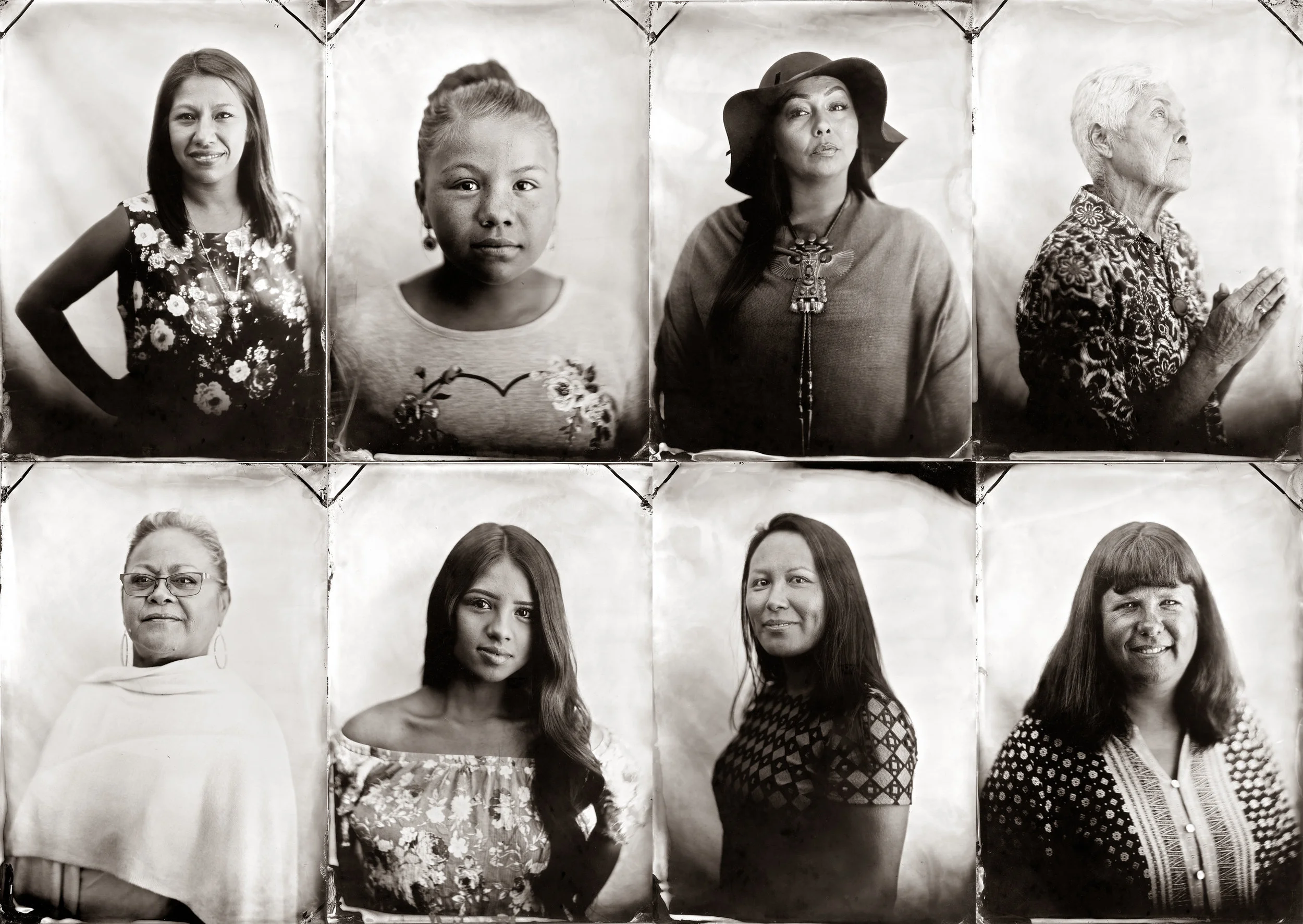
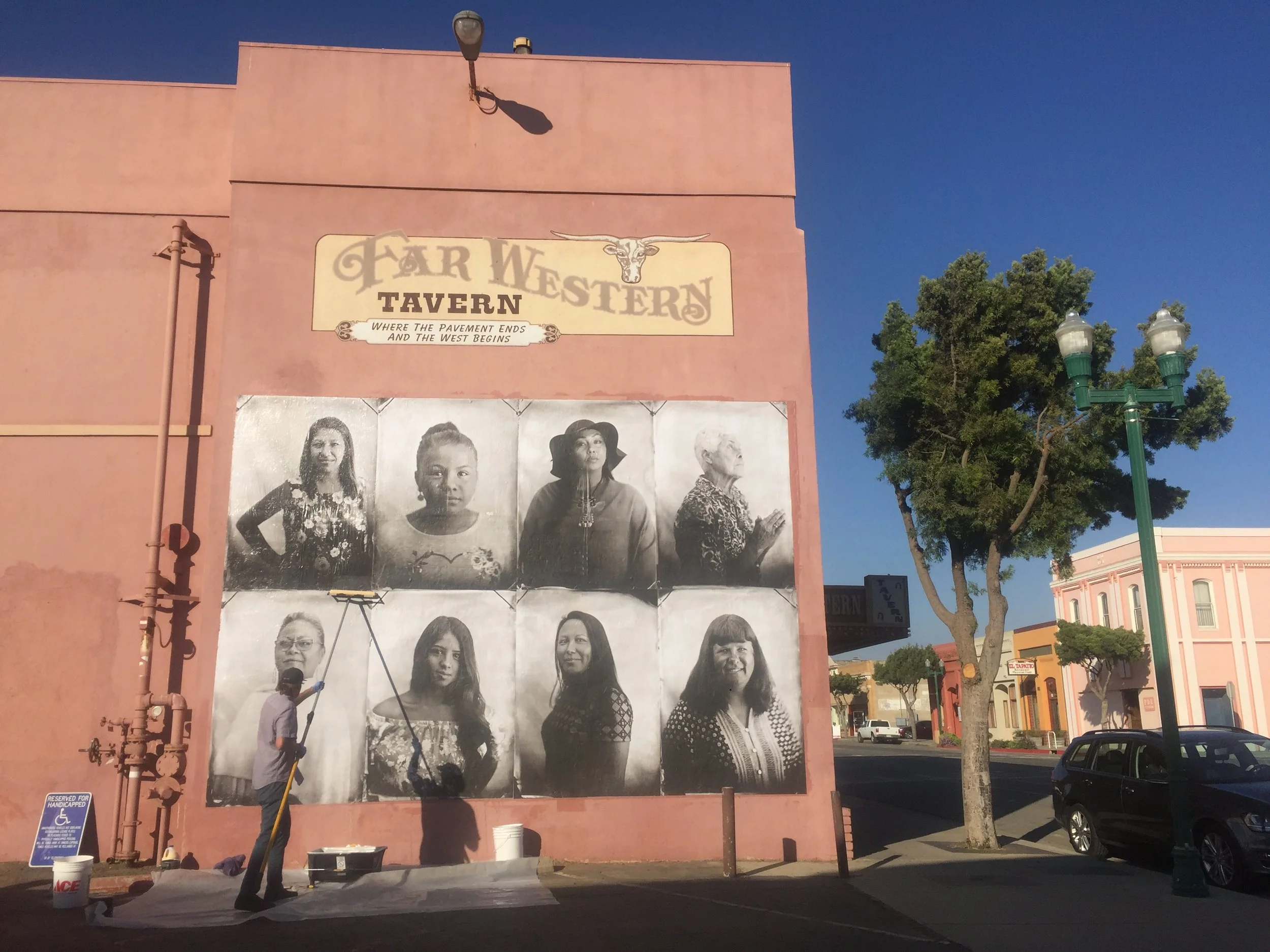
Our Ladies of Guadalupe is a mural installed on a historic building in Guadalupe, CA. It is comprised of eight portraits of women all of whom have deep family roots in Guadalupe. They represent a diverse range of occupations, ethnicities and ages but collectively they form the portrait of "Our Lady of Guadalupe" the saint for which the town was named when it was established in 1840.
Each portrait was created as a 5"x7" tintype original. The building, located at 899 Guadalupe St, Guadalupe, CA, was once the home of the Far Western Restaurant. This building is the future home of the Guadalupe-Nipomo Dune Center. This project was created while the artist was in residence with the Squire Foundation and in partnership with the Guadalupe-Nipomo Dune Center.
A Study in Cerise
Ingress, egress, regress
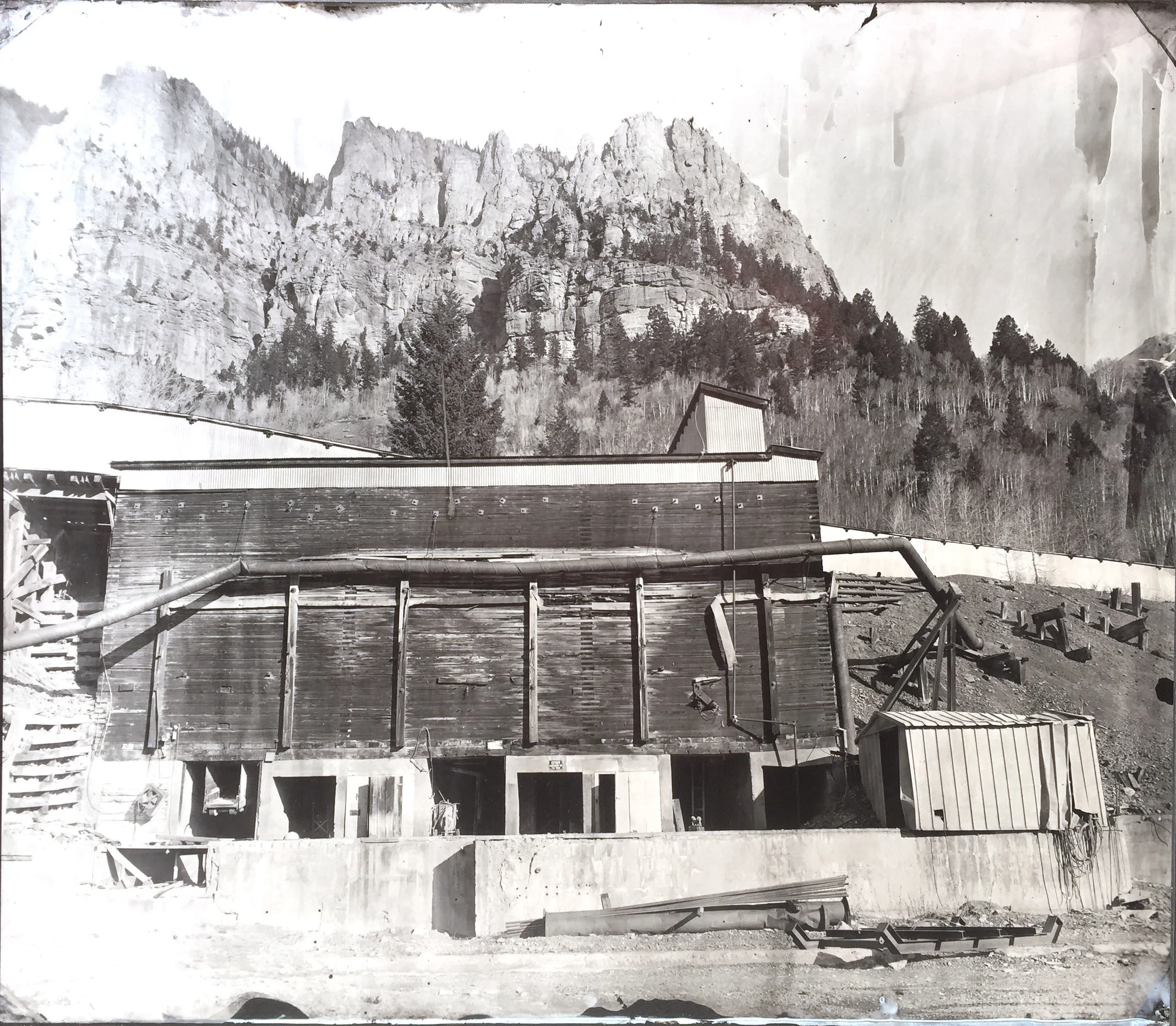
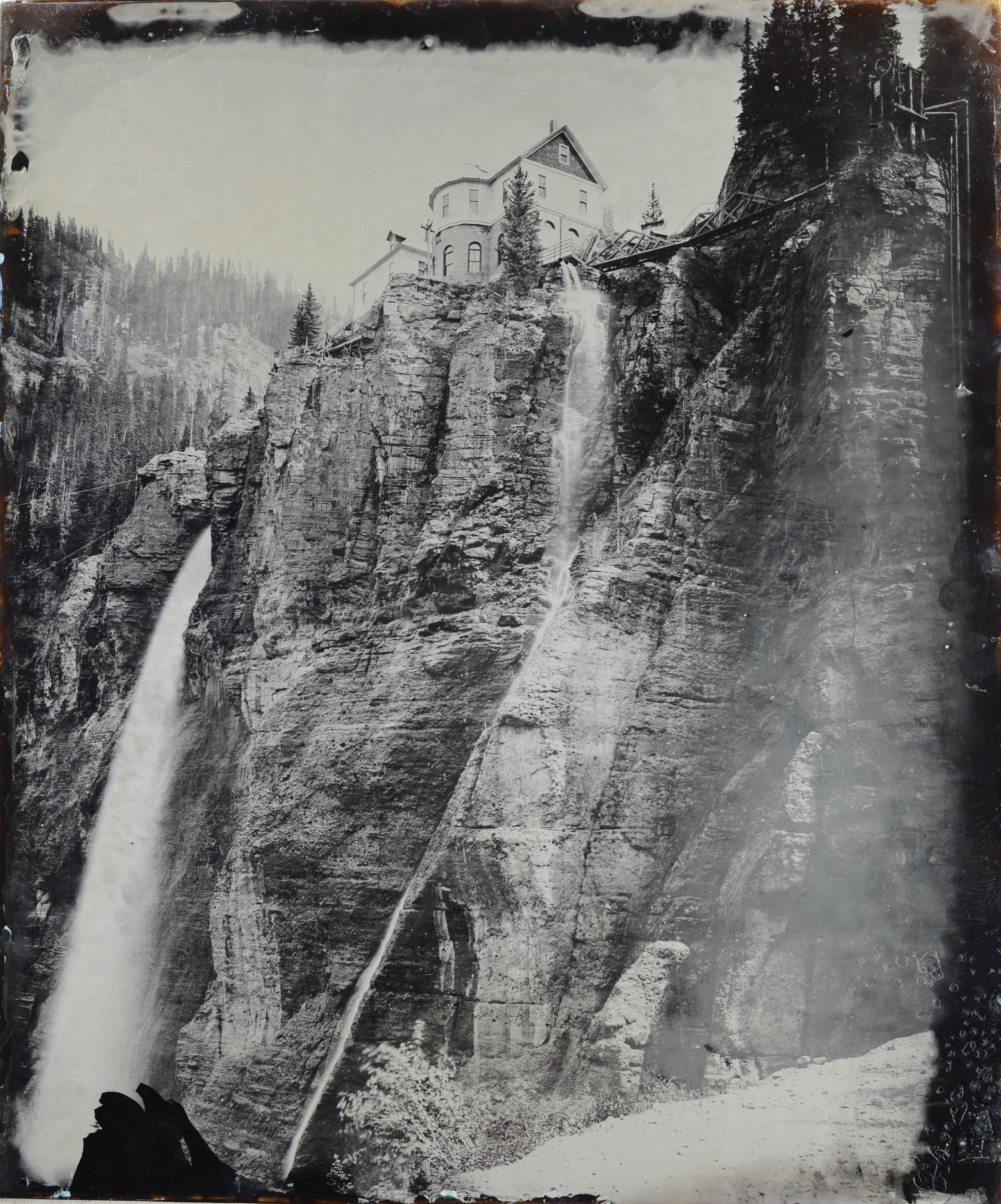
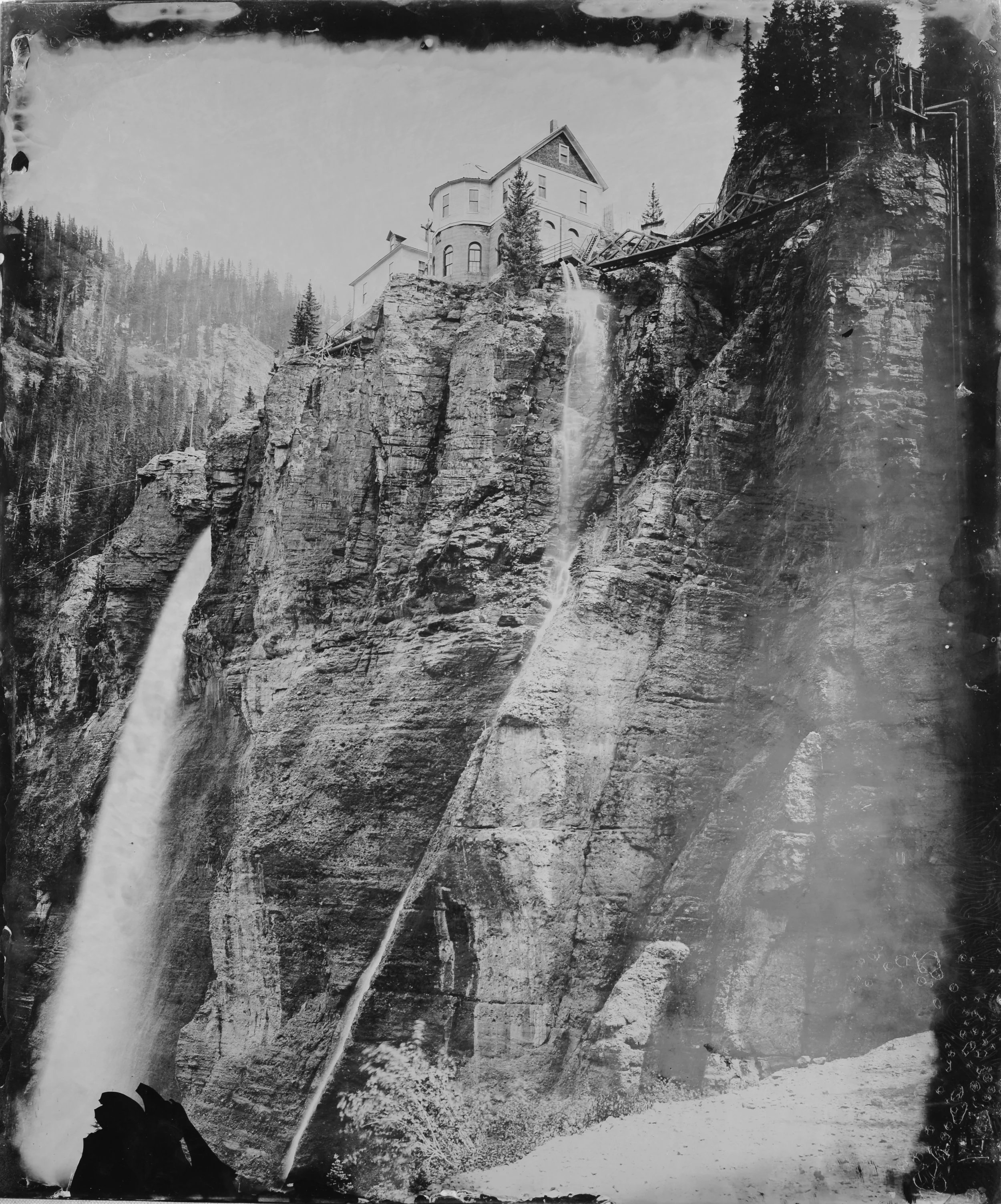
I am interested in the tension between the natural and technological sublime among silver-mining ruins in the San Juan Mountain Range. While the landscape was traditionally known as being the portal to the sublime, I am most interested in the scars left by of the mining industry, how they intersect nature and what kind of meaning and stories those ruins possess. Mine shafts, buildings and roads which were once a sign of strength, progress and fortune appear vulnerable, fragile and animate in the violent, unforgiving landscape.
The images are rendered with the detail and veracity which set photography apart from other mediums in the late 19th century. Wet plate collodion process is only sensitive to blue and ultraviolet wavelengths, a quality which seems to reorder the values of the subject matter. Beauty and ugliness, living and dead seem to be less objective but more fluid through the lens of this process. So while the ruins mark the end of an industry, they twinkle in the dust like precious gems.
Over the Hills
My California has been vulnerable and volatile. The landscape has a cadence. In these images bodies create the illusion of landscapes; geological features in constant transition and movement. Mountains are fluid, moving at a pace much slower than that of humans.
Over the Hills images are tea-toned cyanotypes. The emulsion is made with a solution of salts and the image is exposed in the California sunlight. Cyanotype images are in flux: sensitive to UV light these images fade when exposed to UV light and return when placed in the dark.